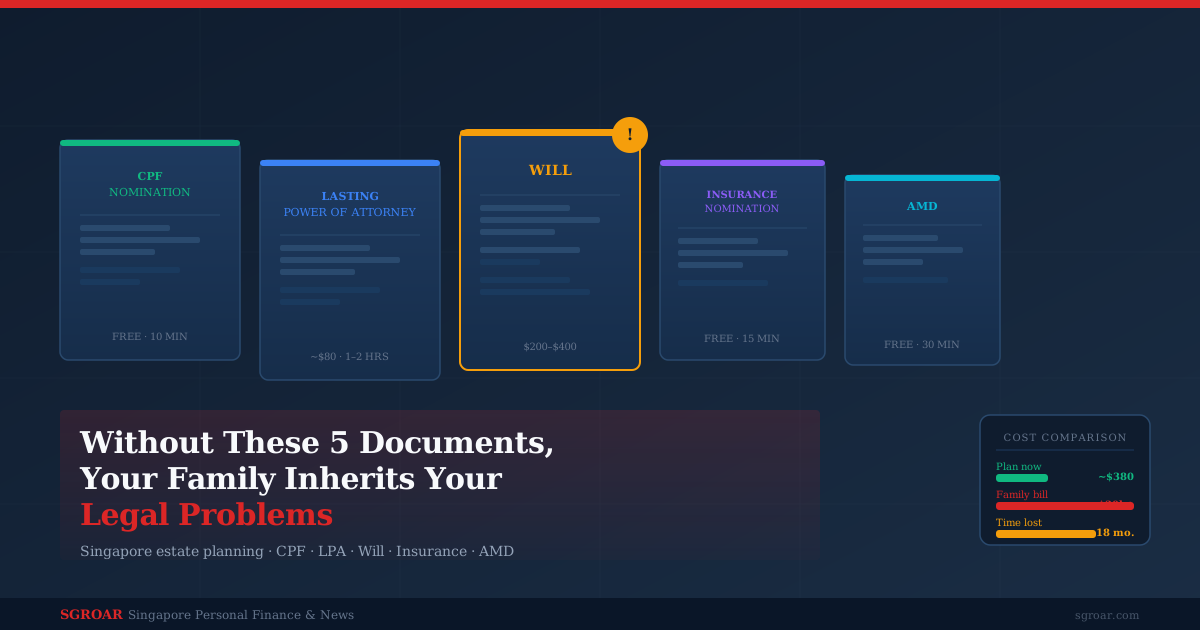
Singapore Estate Planning · Key Numbers
The cost of planning vs the cost of not planning
All figures based on Singapore government fees, documented case patterns, and legal cost ranges current as of 2026.
A typical Singapore estate: sole-name HDB flat, CPF savings, life insurance, two children. No planning documents in place.
CPF Nomination
All CPF balances — OA, SA, MA, RA
Without it: Public Trustee distributes under ISA formula; admin fees deducted
LPA
Financial & welfare decisions if you lose mental capacity
Without it: Family must go to court — $5,000–$15,000, 6–12 months
Will
Bank accounts, sole-name property, investments, personal assets
Without it: Intestate Succession Act decides — your wishes are irrelevant
Insurance Nomination
Life policy payouts directly to nominees
Without it: Payout enters estate — slower, subject to creditors
AMD
End-of-life treatment if terminally ill and unconscious
Without it: Doctors must prolong life by default; family bears the burden
Based on documented Singapore legal case patterns. Assumes sole-name HDB flat, CPF savings, no will or nomination in place.
Sources: Singapore Intestate Succession Act; CPF Board; Office of the Public Guardian (MSF); Ministry of Health; documented Singapore legal cost ranges 2026. The $380 planning cost is a floor estimate. The $15,000–$30,000 family bill is the documented low-end for a typical estate without planning documents.
Consider a family in Bishan. The husband is 47. He has a wife, two teenagers, a 5-room HDB flat worth $820,000, and $218,000 in CPF savings. He has a will. He has life insurance. He is, by most measures, a responsible man.
He dies suddenly. Heart attack. No warning.
His CPF does not go to his wife. His will cannot touch it — CPF is governed by its own Act and sits entirely outside his estate. Without a nomination, the $218,000 passes to the Public Trustee’s Office, which distributes it under the Intestate Succession Act: $109,000 to his wife, $54,500 to each child. Admin fees are deducted before distribution. She expected $218,000. She receives $105,000, six months later.
His HDB flat is in his sole name. She wants to sell and move. She cannot — the flat is frozen until the Family Justice Courts grant Letters of Administration. Six to nine months. $5,000–$8,000 in legal fees. She continues paying the mortgage on a flat she cannot sell.
His life insurance has no named beneficiary. The payout enters his estate. Further delays. Outstanding estate debts can be claimed against it first.
Final tally: fourteen months. Over $18,000 in legal, court, and Public Trustee fees. A frozen flat. Three lawyers.
He could have prevented all of it in a single afternoon for under $400.
This is not a hypothetical. It is a composite drawn from documented case patterns — exactly what Singapore law does when no planning is in place. What follows is an account of the five documents that would have changed everything, and how to get each one.
Five Documents. Five Gaps. Any One Can Derail Your Family.
The man in Bishan had a will. It made no difference to his CPF, his flat, or his insurance payout — because these five documents are completely separate legal instruments, each governed by its own statute, each covering a different asset or scenario. Most people assume that having a will covers everything. That assumption is one of the most expensive mistakes a Singaporean family can make.
| Document | What it covers | When it kicks in | Without it |
|---|---|---|---|
| Will | Bank accounts, sole-name property, investments, personal assets | After death | Intestate Succession Act decides — your wishes are irrelevant |
| CPF Nomination | All CPF balances (OA, SA, MA, RA) | After death | Public Trustee distributes under fixed ISA formula; admin fees deducted |
| Insurance Nomination | Life policy payouts | After death | Payout enters estate — slower, subject to creditors |
| LPA | Financial and welfare decisions | If you lose mental capacity while alive | Family must go to court — $5,000–$15,000, 6–12 months |
| AMD | Whether to use extraordinary life-sustaining treatment | If terminally ill and unconscious | Doctors must prolong life by default |
Note for Muslim Singaporeans: The Intestate Succession Act does not apply to Muslims. Estates follow Islamic inheritance law (Faraid) through the Syariah Court. CPF nominations and LPAs work the same way regardless of religion.
CPF: The Asset Your Will Cannot Touch
Your CPF money cannot be distributed through your will. Full stop. This is the single most misunderstood fact in Singapore estate planning. CPF does not form part of your legal estate — it is governed entirely by the Central Provident Fund Act, which operates independently of the Wills Act.
If you die without a nomination, every dollar in your OA, SA, MA, and RA goes to the Public Trustee’s Office. Under the Intestate Succession Act, the formula is fixed: 50% to spouse, 25% to each child (if you have two). Your will cannot override this. Marriage automatically revokes any existing nomination — if you made one before your wedding and never updated it, it is void.
The scenario your spouse doesn’t expect: A man dies with $180,000 in CPF, a wife, and two adult children. He has a will leaving everything to his wife. He has no CPF nomination. His wife gets $90,000 — not $180,000. The children get $45,000 each. The Public Trustee deducts admin fees. The process takes months. His will said nothing about this because his will legally could not.
The fix: Log in to my.cpf.gov.sg with Singpass. Make or update your CPF nomination. You need two witnesses who are not your nominees. Takes ten minutes. Costs nothing. Do it before you close this tab.
A Will: Because the Court Doesn’t Know Your Family
You probably don’t feel wealthy. But if you own an HDB flat, have CPF savings, and carry life insurance, you are almost certainly worth over a million dollars to your family on paper. Without a will, the Intestate Succession Act decides who gets every dollar of it — and it does not know that you wanted your flat to go to the child who lives nearby, or that your sibling hasn’t spoken to you in eight years but legally qualifies under the formula.
The ISA follows a strict hierarchy with no exceptions: spouse → children → parents → siblings → other relatives. While that process plays out, your family must apply to court for Letters of Administration before they can touch any solely-owned asset. That costs $3,000–$10,000 and takes months. During that time, a sole-name HDB flat is frozen.
With a valid will, you control who inherits what, who executes your estate, and — most critically for parents — who becomes legal guardian of your minor children if both parents die. Without a will, the court appoints a guardian. Not who you would have chosen.
What makes a will legally valid in Singapore: You must be at least 21, sign in wet ink at the end of the document, in front of two witnesses who are both present at the same time, and neither witness can be a beneficiary. Getting any formality wrong can void the entire document.
| How to make your will | Approximate cost | Best for |
|---|---|---|
| Lawyer (recommended) | $200–$600 | Most people; professional drafting and witness arrangement |
| Online will-writing services | $100–$300 | Simple estates with clear beneficiaries |
| DIY (written yourself) | Free | Only if you follow formalities exactly — easy to invalidate |
HDB flat under joint tenancy? The Right of Survivorship applies — the surviving owner automatically inherits, bypassing both the will and intestacy rules. This is separate from your will. Check your HDB ownership type if unsure.
The LPA: What Happens When You Don’t Die, But Can’t Decide
Here is the scenario most people never plan for: you don’t die. You have a stroke. A serious accident. Dementia. You are alive, but you are no longer able to make decisions. In that moment, your family has zero legal authority to touch your bank account, sell your flat, or make medical decisions on your behalf — even if they are your spouse or adult children. Not without a court order.
Without a Lasting Power of Attorney (LPA), they must apply to the Family Justice Courts to be appointed as your deputy. That process costs $5,000 to $15,000 in legal fees and takes six to twelve months. During that entire period, your financial assets are frozen. Your family cannot access joint savings, refinance, or pay for your care from your own money without going through the courts first.
Over half of older Singaporeans without an LPA wrongly believe their children can automatically act for them if they lose mental capacity. They cannot — not without a court order. This is perhaps the most common and dangerous myth in Singapore estate planning.
Cost to get an LPA: The OPG application fee for LPA Form 1 has been permanently waived for Singapore Citizens since April 2026. You pay a certificate issuer (a doctor or accredited lawyer) — fees start from $24 at a GP clinic. Total cost: under $100 for most people.
You can start your LPA at the MyLegacy@LifeSG portal (mylegacy.life.gov.sg) or visit an accredited medical clinic. The LPA only takes effect when two registered doctors certify that you have lost capacity — until then, you remain fully in control.
The AMD and ACP: Your End-of-Life Voice
An Advance Medical Directive (AMD) is a legal document telling your doctor that you do not want extraordinary life-sustaining treatment if you are terminally ill and unconscious. Without an AMD, doctors are legally required to use all available measures to sustain life, regardless of the prognosis. Your family is left bearing the burden of that decision.
Making an AMD requires you to be mentally sound and at least 21, and to sign it before a doctor and two witnesses. It must be registered with the Registrar of AMD at the Ministry of Health to be valid. There is no government fee to register.
Advance Care Planning (ACP) is broader but not a legal document — a structured conversation that records your values, care preferences, and who you want to speak for you (your Nominated Healthcare Spokesperson). It guides doctors and your family without legally binding them. Available through mylegacy.life.gov.sg, the Agency for Integrated Care, and most restructured hospitals.
LPA vs AMD: An LPA donee manages your finances and welfare while you’re alive and incapacitated. An AMD speaks specifically to end-of-life treatment when terminally ill. Both are complementary — an LPA alone does not address end-of-life treatment preferences.
Life Insurance Nomination: The One Most People Forget
Many Singaporeans pay premiums for years but never nominate a beneficiary — or nominated someone before a divorce and forgot to update it. Without a nomination, your life insurance payout enters your estate and goes through probate: slower, subject to your estate’s debts, and exposed to creditors.
With a named nominee, the payout goes directly to them, bypassing the estate entirely. For policies covered under Section 73 of the Conveyancing and Law of Property Act (a “trust nomination”), payouts go directly to your spouse and children and are protected from creditors. Check with your insurer whether you have a valid nomination, and update it after any major life event — marriage, divorce, new child, death of a nominee.
When to Review and Update
Death planning is not a one-time task. Life changes, and your documents must reflect that.
- Marriage: Automatically revokes your existing CPF nomination and your will. Update both immediately. Review insurance nominations.
- Divorce: Does not automatically remove your ex-spouse from nominations or your will. Update everything — especially your LPA donee.
- Child born or adopted: Review your will to add the child, name a guardian, update CPF nomination percentages.
- Property purchase: Significant asset change — review your will, confirm your executor knows. Check ownership type.
- Every 5 years otherwise: Nominees die, relationships change, laws evolve.
What Your Family Actually Faces If You Do Nothing
Not a risk. Not a possibility. This is what Singapore law will do, step by step, to a typical family — parent aged 42, a spouse, two children aged 8 and 12, HDB flat in sole name, CPF savings, life insurance — if that parent dies today with none of these documents in place.
CPF ($180,000–$250,000): Goes to the Public Trustee. ISA formula splits it — 50% to spouse, 25% to each child. The surviving spouse expected all of it to pay off the mortgage. They receive half, minus Public Trustee admin fees, after months of waiting. The children’s shares are held as trust funds managed by the court until they turn 21.
HDB flat (sole name): Immediately frozen. Cannot be sold, refinanced, or transferred until Letters of Administration are granted — six to nine months, $3,000–$10,000 in legal fees. The family continues paying the mortgage on a flat they cannot move or monetise.
Life insurance payout: No beneficiary named means the payout enters the estate. It joins the queue. Outstanding debts of the estate can be claimed against it before the family receives a dollar.
If both parents die simultaneously — a car accident, for instance — the court appoints a guardian for the children. Not a family member you designated. Not the person you trusted. Whoever the court decides. No one has legal authority over the children’s financial assets until the court processes an application that the children themselves cannot file.
The bill your family pays for your inaction: $15,000–$30,000 in legal and administrative fees. 6–18 months of legal process. A frozen flat. Family conflict that could have been avoided entirely. And the grinding realisation — while they are still grieving — that every part of this was optional.
| Your planning cost today | Your family’s legal bill if you don’t |
|---|---|
| CPF Nomination: $0 | Court deputyship (no LPA): ~$10,000 |
| LPA (OPG + cert. issuer): ~$80 | Letters of Administration: ~$5,000 |
| Advance Medical Directive: $0 | Public Trustee admin fees: ~$2,000 |
| Simple will (lawyer): ~$300 | Legal & miscellaneous: ~$5,000 |
| Total: ~$380 | Total (low estimate): $15,000–$30,000 |
Plus 6–18 months of legal process and a frozen flat your family cannot sell or refinance. The $380 is a floor estimate. The $15,000 family bill is the documented low end.
Your Action Plan
You will not be here to deal with the consequences of skipping this. Your family will. The CPF nomination takes 10 minutes and costs nothing. The LPA costs under $100. A will costs $200–$400. The total is less than a weekend trip. Here is the order that matters — start at the top.
-
Make or update your CPF Nomination — today. Log into my.cpf.gov.sg with Singpass. Takes 10 minutes. Completely free. Needs two witnesses who aren’t your nominees. Do this before you close this tab.
-
Apply for your LPA (Form 1). Go to mylegacy.life.gov.sg or visit an accredited doctor or clinic. Now free for Singapore Citizens. Budget $24–$80 for the certificate issuer.
-
Check your insurance nominations. Contact each insurer you have a policy with. Confirm your nominee is up to date. Ask about trust nominations under Section 73 if applicable.
-
Write your will. Engage a lawyer for a simple will — budget $200–$400. Consider depositing a notice with the Wills Registry at Singapore Academy of Law so your executor can find it.
-
Register an Advance Medical Directive. Your doctor can walk you through this. Register with the Registrar of AMD at MOH. Free to register.
-
Complete an Advance Care Plan (ACP). Available at mylegacy.life.gov.sg or through AIC and most restructured hospitals. Documents your care preferences and appoints a Nominated Healthcare Spokesperson.
-
Store everything and tell someone. Tell your executor where your will is. Tell your LPA donee they’ve been appointed. Use MyLegacy Vault to store key information securely.
The Digital Dimension: What About Your Online Life?
Cryptocurrency, PayNow balances, ShopeePay credits, stock trading accounts, a Google Drive full of work files — none of these are automatically accessible to your family after you die.
The practical step: create a secure document (stored in a password manager or encrypted file, not a Post-It note) that lists your key digital accounts, logins, and recovery methods. Tell your trusted person where to find it. MyLegacy Vault allows you to store this information securely and share it with designated Trusted Persons.
Cryptocurrency deserves special mention: if your private keys die with you, the funds are gone permanently. Consider how to pass this information safely to a beneficiary, whether through hardware wallet documentation or a trusted custodial arrangement.
Where to Act
MyLegacy@LifeSG (mylegacy.life.gov.sg) is the Singapore government’s single portal for CPF nomination status, LPA applications, Advance Care Planning, will-writing guidance, and a secure Vault for key documents. Login with Singpass. Most of what this article describes can be started there today, for free.
Every week this sits on your to-do list is another week your family is one accident away from frozen accounts, the Public Trustee’s formula, and the Family Justice Courts — while they are still in shock from losing you. The fix costs less than a decent family dinner and takes less time than a Sunday afternoon.
You won’t be there to face the consequences of not doing this. They will. That’s the only reason you need to start today.
This article is for general informational purposes. It is not legal advice. Please consult a qualified lawyer or financial adviser for guidance specific to your personal situation. For Muslim estate matters, consult a lawyer experienced in Syariah Court proceedings.
Sources: Singapore Intestate Succession Act (Cap. 146); Central Provident Fund Act 1953 (Section 25); Mental Capacity Act 2008; Advance Medical Directive Act 1996; CPF Board; Office of the Public Guardian (MSF); Ministry of Health; MyLegacy@LifeSG; SmartWealth.sg estate planning statistics (July 2026); Singapore Legal Advice; PKWA Law.
Comments